


The Summer Slump: Why You Feel Tired, Foggy and Off When Summer Is Supposed to Feel Easy

Summer is often considered as our easiest season: vacations, more sunlight, longer days, weekends away, beach getaways, and more time to enjoy ourselves. And yet somewhere between the first long days of June and the heat of late summer, that idyllic feeling fades, and many of us experience something that hasn’t really been named.
You wake up tired despite summer supposedly being restorative. Your afternoon energy disappears. Focus feels harder to hold. Your usual workout takes a little more out of you. You even move a little more slowly. And you might wonder why: could it be because your bedtime gets later even though you’re spending less time in the office? You constantly weigh the net gains and losses. Perhaps you are even sleeping in, taking time off and wondering why you don't feel particularly rested.
We call this the Summer Slump. It isn't a diagnosis, and this isn’t a clinical term by any means. It is our name for a constellation of small, seasonal adjustments that can accumulate during the summer until the body and mind feel noticeably out of rhythm.
And unlike a lot of wellness problems, the answer is not prescriptive per se: it’s not really a matter of what you need to do more or less of, it’s more a matter of understanding the effect the summer has on your body.
What is the Summer Slump?
We define the Summer Slump is the cumulative drag that can occur when heat, fluid loss, changing daylight, disrupted sleep and routines, travel, increased activity level fluctuation and inconsistent nutrition begin overlapping.
Individually, none of these necessarily feels significant. Together, they can confuse the internal biorhythm of the body, and show up as fatigue, brain fog, reduced motivation, irritability, restless sleep, lower exercise tolerance, slower recovery, appetite changes or simply that difficult-to-describe feeling of being a little off.
The paradox is that many of the things we love about summer can contribute to it.
More daylight can mean later dinners and even later nights. More travel can mean less routine and body clock disruptions. More outdoor activity creates greater recovery demands. Heat changes the amount of work the body must do simply to maintain its internal balance. More sweating changes fluid requirements. Vacations may interrupt the very nutritional and sleep habits that ordinarily help us manage our steady baseline.
Summer doesn't necessarily take one big thing away from us. It can take a little bit from several systems at once.
Heat is work
Even when you're doing nothing particularly strenuous, your body is actively managing the environment around you.
A body experiencing excessive heat experiences blood flow shifts, increased lymph activity, and body fluid movement as sweating increases to help dissipate heat. As thermal strain rises, cardiovascular demand rises with it. Research increasingly suggests that heat stress can also affect mental performance, particularly more complex cognitive tasks requiring sustained attention, working memory and executive function. It also slows recovery and contributes to a general tired feeling, even when we don’t think we’ve been doing much!
In other words, that 95-degree day doesn't only feel exhausting. Your body is working the entire time to allocate resources that keep its internal environment stable.
That may help explain a particularly recognizable summer experience: you haven't necessarily done enough to justify being exhausted, and yet everything feels as though it takes slightly more effort.
Then comes the hydration gap
Sweating is wonderfully effective at regulating temperature, but it also means losing water and electrolytes.
And the effects of falling behind on hydration (the combination of water and electrolyte balance) can be surprisingly subtle yet deeply impactful. Controlled studies of mild dehydration have found increases in fatigue, tension, anxiety and perceived difficulty with tasks; other research has reported decreased alertness and increased sleepiness and confusion as fluid restriction progresses. The concerning part is that you often won’t feel dramatically thirsty to experience the consequences.
Sometimes key symptoms of dehydration to watch for include:
Why can't I concentrate?
Why am I exhausted at 3 p.m.?
Why does my workout feel unusually difficult?
Why do I have no energy despite sleeping?
When heat exposure, dehydration and inadequate sleep occur together, trying to isolate a single reason for these feelings is beside the point as it becomes a cascading cumulative system.
More sunlight doesn't always equal more energy
Our circadian rhythm, otherwise known as the body clock, uses light and darkness as major timing signals. Research shows that circadian timing adapts to seasonal changes in the natural light-dark cycle, while longer summer daylight can alter the timing of biological rhythms including hormonal shifts in melatonin production.
There isn't evidence that everyone experiences some universal summer hormonal crash. But light itself is a hormonal and circadian signal.
Add longer evenings, later dinners, vacations, social plans and warmer nights, and summer can have quite a big effect on when we go to sleep and how much sleep we get. Large observational studies have found seasonal differences in sleep, including shorter sleep duration during the summer and changes in bedtimes as temperatures and daylight length rise.
That creates another summer cycle:
tired during the day, surprisingly awake at night.
The schedule loosens before the body does
Summer also dismantles routine in ways that are both enjoyable and easy to underestimate.
A Friday trip becomes a Thursday night departure. Breakfast becomes whatever is available at the hotel or nearby store. Lunch happens after the mid-day excursion at four. Summer vacation dinner happens at ten. Exercise becomes a long walk through a new city one day and nothing the next as you sit on a train. There are flights, weddings, vacations, children's schedules, restaurant meals, drinks, and weekends that begin earlier and end later.
Life happens, and none of that is inherently unhealthy. But the body still thrives on consistency.
Nutrition is a particularly important piece of this. A week of irregular meals isn't the same thing as malnutrition, but when inconsistent eating, is added to the above list simultaneously, the body experiences a greater setback.
This is one reason we think of daily wellness less as a pursuit of perfection and more as anchors: small inputs that remain relatively consistent even when everything surrounding them changes.
And yes, summer can affect the mind
There is also a psychological layer.
Heat itself has been associated with changes in cognitive performance and mental health, while summer can create a peculiar mismatch between how we actually feel and how we believe we should feel.
Everyone else appears to be on vacation. The days are beautiful. Your social calendar is full.
So why aren't you energized?
Sometimes that expectation becomes part of the problem. Summer can be highly stimulating: more plans, more travel, more people, more daylight, more activity and less protected downtime. A vacation is a break from work; it is not automatically physiological recovery.
So what do we do about it?
The temptation when energy disappears is to compensate. More coffee. More discipline. A stricter workout. A detox after vacation. A complete return to routine on Monday. But this can burn the candle on both ends.
We think there is a better approach:
Restore the inputs that summer has made less consistent.
Protect a few anchors
You don't need the same schedule in August that you kept in February.
But some regularity matters.
Try retaining a few basic anchors even through travel and weekends: a reasonably consistent waking window, adequate fluids, movement, a dependable nutritional touchpoint and a protected transition into sleep.
For us, this is one of the most practical roles for Superstar.
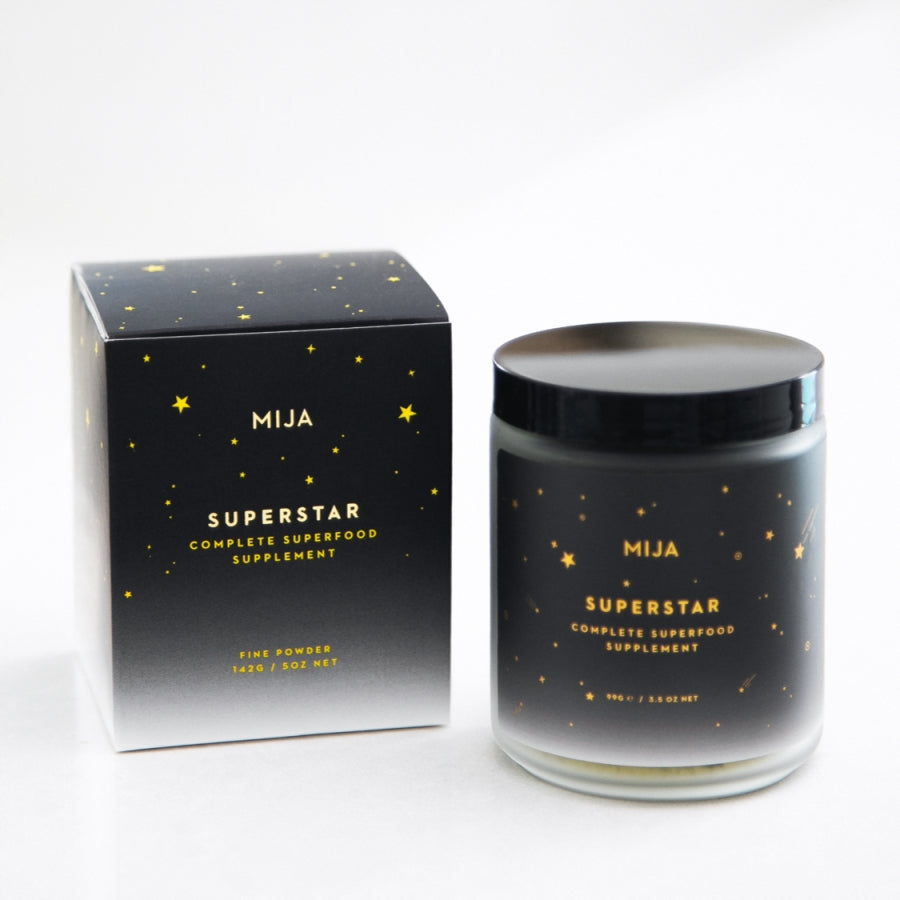
It was created around exactly this idea of consistency in establishing a nutritionalbaseline: 17 organic whole-food ingredients—including matcha, moringa, goldenberry, goji, camu camu, chaga, avocado, hemp, chlorella, cacao, ginger and turmeric—in a two-teaspoon daily ritual.
Think of it as an insurance plan for your nutritional baseline even when your life becomes unpredictable.
Treat sleep as bigger part of your summer wellness plan
We tend to become much more permissive with sleep, or lack thereof, during summer because the days feel less structured. But anyone serious about wellness knows it’s the cornerstone in any routine.
A later evening every now and then doesn't matter. A season of increasingly irregular nights can shift your overall wellbeing.
If you're experiencing the classic combination of low daytime energy and late-night alertness, look at your light and schedule before assuming you simply need another stimulant. Morning light, a more consistent wake time, reduced late-evening light exposure and a comfortable bedroom temperature can help reinforce the signals that organize the circadian day.
An evening ritual can help create that boundary too. Sereno Velo was designed as a magnesium-based body ritual for post workout recovery, following a shower or before bed, pairing magnesium with beneficial co-factors Vitamin B6, Zinc PCA, aloe and botanical extracts, including lavender, that promote restfulness and recovery.
Sometimes the utility of a ritual is partly that it tells the day: it’s time to wind down.
Adjust your output instead of judging it
Summer is not necessarily the moment to demand identical performance from the body under different environmental conditions.
Heat adds physiological load. A workout performed in high temperatures is not the same physiological experience as that same workout in a temperate room.
Move earlier when possible before the mid-day temperature peak. Adjust intensity to something more sustainable. Give recovery the same consideration you give activity.
Feeling that something is harder in the heat does not mean you've suddenly become less fit or less disciplined. It literally is harder.
Remember that summer happens on the outside, too
There is also an external version of the Summer Slump. Recent dermatological research characterizes UV exposure as one of the leading major stressors to the epidermal barrier, with oxidative, inflammatory and barrier effects among the downstream consequences of excessive exposure in the summer time.
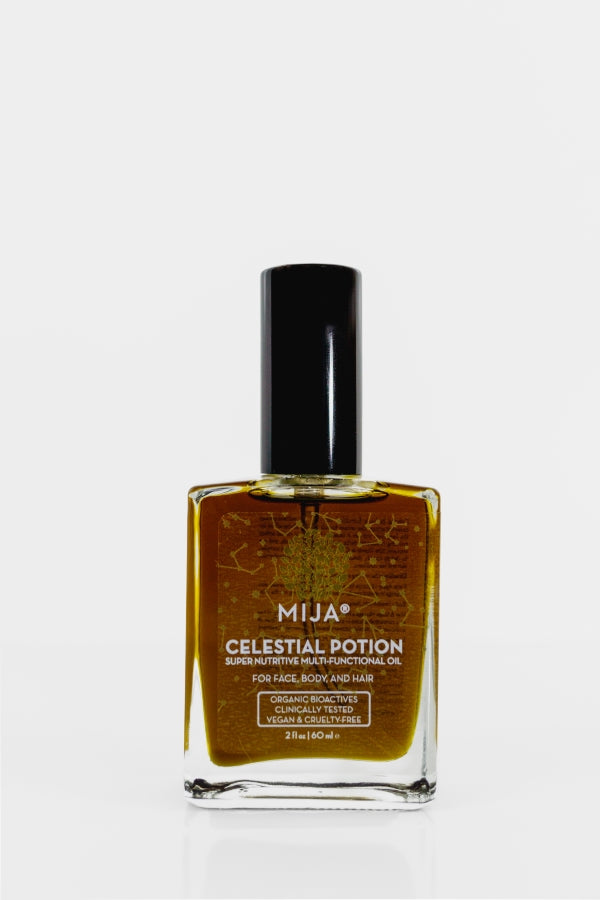
While sun protection remains the first line of defense, summer can be a sensible time to prioritize barrier-supportive lipids and antioxidants. Celestial Potion, for example, combines antioxidant and essential fatty acid rich green tea and moringa seed oils, squalane, whole-plant infusions and clinical antioxidant actives including Vitamin C, Vitamin E and CoQ10 to replenish lipids and support the skin barrier across face and body.
The Summer Slump isn't something to fight
Perhaps the most useful thing about naming the Summer Slump is realizing that it isn't necessarily a personal failing. Summer changes the inputs:
Temperature changes. Light changes. Schedules change. Fluid needs change. Activity level changes. Eating patterns can change. Sleep changes. Recovery requirements change.
And if enough of those variables move at once, you’ll surely feel different too.
The answer is to identify the few things your body relies upon regardless of season—nutrition, hydration, sleep, movement and recovery—and keep enough of them intact to build a stable baseline.
Because sometimes getting out of a slump isn't about pushing harder.
It's about rebuilding your baseline.
FEATURED IN THIS STORY
Shop the edit
A considered selection of the products referenced or recommended in this article.


0 comments